

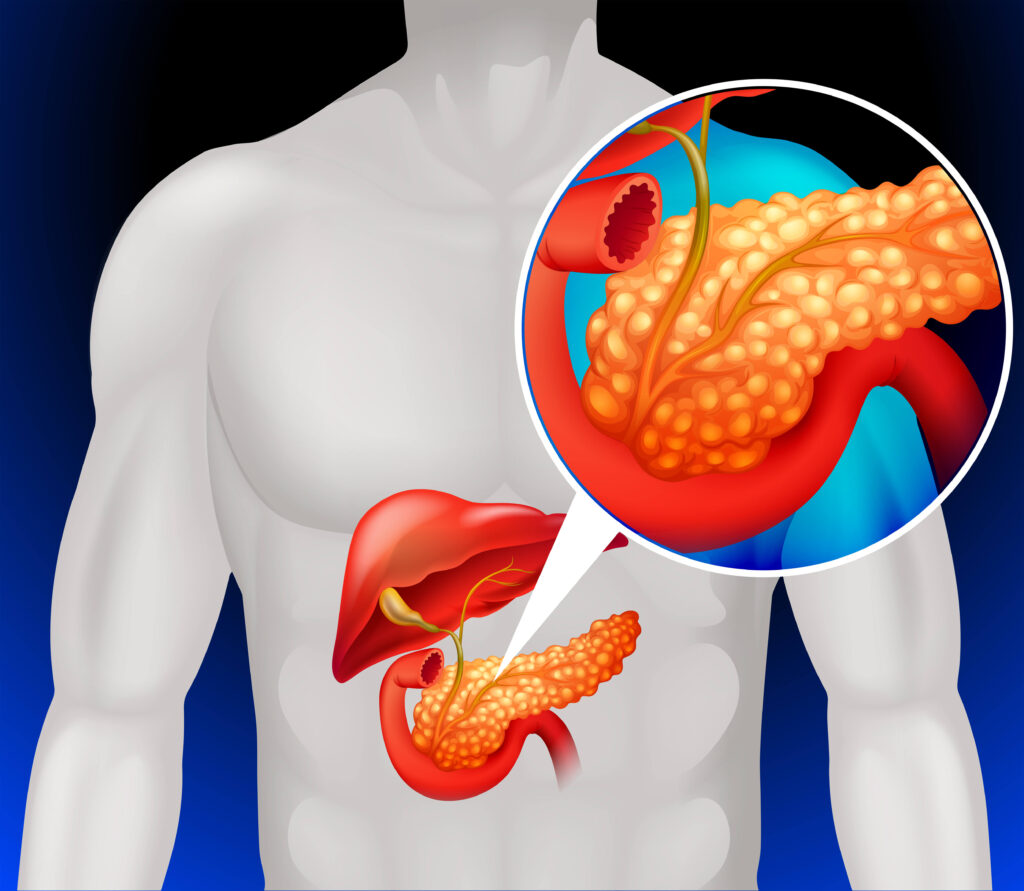
Pancreatic neuroendocrine tumours (often shortened to PNETs) are uncommon tumours that develop in the neuroendocrine cells of the pancreas. These specialised cells help regulate hormones involved in digestion and metabolism.
Unlike the more commonly discussed pancreatic adenocarcinoma, pancreatic neuroendocrine tumours tend to behave differently. Some grow slowly, while others may produce hormones that cause noticeable symptoms.
Because symptoms can be vague or absent in the early stages, these tumours are sometimes detected during imaging tests performed for other reasons.
Key Pointers
- Pancreatic neuroendocrine tumours arise from hormone-producing cells in the pancreas.
- They may be functioning (producing hormones) or non-functioning (not producing hormones).
- Symptoms can vary depending on whether hormones are released.
- Diagnosis often involves blood tests, imaging scans, and specialised procedures.
- Treatment depends on tumour size, location, hormone activity, and whether it has spread.
What Exactly Is a Pancreatic Neuroendocrine Tumour?
A pancreatic neuroendocrine tumour (PNET) develops from neuroendocrine cells located within the pancreas. These cells produce hormones such as insulin and glucagon, which help regulate blood sugar levels and digestion.
PNETs account for a small percentage of pancreatic tumours, but they form a distinct group of conditions that behave differently from other pancreatic cancers.
Doctors often classify these tumours into two main types:
Functioning tumours
These tumours produce excess hormones that can cause symptoms.
Examples include:
- Insulinoma – produces excess insulin
- Gastrinoma – produces excess gastrin
- Glucagonoma – produces excess glucagon
Non-functioning tumours
These tumours do not produce significant hormone levels. As a result, symptoms may only appear when the tumour becomes larger or affects nearby structures.
What Symptoms Can Pancreatic Neuroendocrine Tumours Cause?
Symptoms can vary widely depending on the tumour type and whether hormones are released.
Some individuals may have no symptoms initially, while others may experience hormonal effects.
Possible symptoms include:
- Abdominal pain
- Unexplained weight loss
- Persistent diarrhoea
- Low blood sugar episodes
- Stomach ulcers that recur
- Skin rash in certain hormonal conditions
- Jaundice if the bile duct becomes obstructed
Because these symptoms can also occur in many other digestive conditions, medical evaluation is important for proper diagnosis.
How Are Pancreatic Neuroendocrine Tumours Diagnosed?
Doctors usually use a combination of tests to identify and assess pancreatic neuroendocrine tumours.
Blood and urine tests
These tests may check for hormone levels produced by neuroendocrine tumours.
Imaging scans
Imaging studies help locate the tumour and evaluate its size.
Common scans include:
- CT scan
- MRI scan
- PET scan using specialised tracers
Endoscopic ultrasound (EUS)
An endoscopic ultrasound involves inserting a thin tube with an ultrasound probe through the mouth to visualise the pancreas closely. A tissue sample may also be taken for analysis.
These tests help doctors confirm the diagnosis and determine the most appropriate management approach.
Are Pancreatic Neuroendocrine Tumours Always Cancerous?
Pancreatic neuroendocrine tumours can behave in different ways.
Some tumours grow slowly and remain localised, while others may spread to nearby organs such as the liver.
Doctors often assess:
- Tumour size
- Tumour grade (how abnormal the cells appear)
- Whether the tumour has spread
- Hormone activity
This information helps determine the stage of the tumour and guide treatment decisions.
What Treatment Options Are Available for Pancreatic Neuroendocrine Tumours?
Treatment depends on several factors, including tumour size, location, whether hormones are produced, and whether the tumour has spread.
Surgery
Surgery may be considered when the tumour is localised and removable.
Common surgical procedures may include:
- Distal pancreatectomy – removal of part of the pancreas
- Pancreaticoduodenectomy (Whipple procedure) – removal of the pancreatic head and surrounding structures
- Tumour enucleation – removal of the tumour while preserving pancreatic tissue in selected cases
Medical therapy
Certain medications may be used to:
- Control hormone-related symptoms
- Slow tumour growth in some cases
Targeted treatments and other therapies
Depending on the individual situation, treatment may also involve:
- Targeted therapy medications
- Peptide receptor radionuclide therapy (PRRT)
- Liver-directed treatments if the tumour has spread
Treatment plans are usually tailored based on the patient’s overall health and tumour characteristics.
When Should You See a Doctor for Possible Pancreatic Tumour Symptoms?
It may be advisable to seek medical evaluation if you experience:
- Persistent abdominal discomfort
- Unexplained weight loss
- Recurrent low blood sugar episodes
- Frequent stomach ulcers
- Ongoing digestive symptoms without a clear cause
While these symptoms do not always indicate a pancreatic tumour, an evaluation can help identify the underlying condition and determine whether further investigation is needed.
Frequently Asked Questions
1. Are pancreatic neuroendocrine tumours common?
No. Pancreatic neuroendocrine tumours are considered relatively uncommon compared to other pancreatic cancers.
2. Do all pancreatic neuroendocrine tumours produce hormones?
No. Some tumours are functioning, meaning they produce hormones, while others are non-functioning and may not cause hormonal symptoms.
3. Can pancreatic neuroendocrine tumours be found early?
Some tumours are detected during imaging tests performed for other conditions. However, early detection may be challenging if symptoms are minimal.
4. Is surgery always required for treatment?
Not always. Treatment decisions depend on tumour size, growth rate, hormone activity, and whether the tumour has spread.
5. What doctor treats pancreatic neuroendocrine tumours?
Management may involve a multidisciplinary team, including hepatopancreatobiliary surgeons, gastroenterologists, oncologists, and radiologists.
Concerned About Symptoms Related to the Pancreas?
Digestive symptoms such as persistent abdominal pain, unexplained weight loss, or recurring ulcers may sometimes require further evaluation.
A consultation with a specialist can help assess symptoms, recommend appropriate investigations, and discuss possible management options if a pancreatic condition is suspected.
Book an appointment with Dr Lee Lip Seng, Senior Consultant Surgeon (Hepato-Pancreato-Biliary Surgery), to discuss your symptoms and evaluation options.