

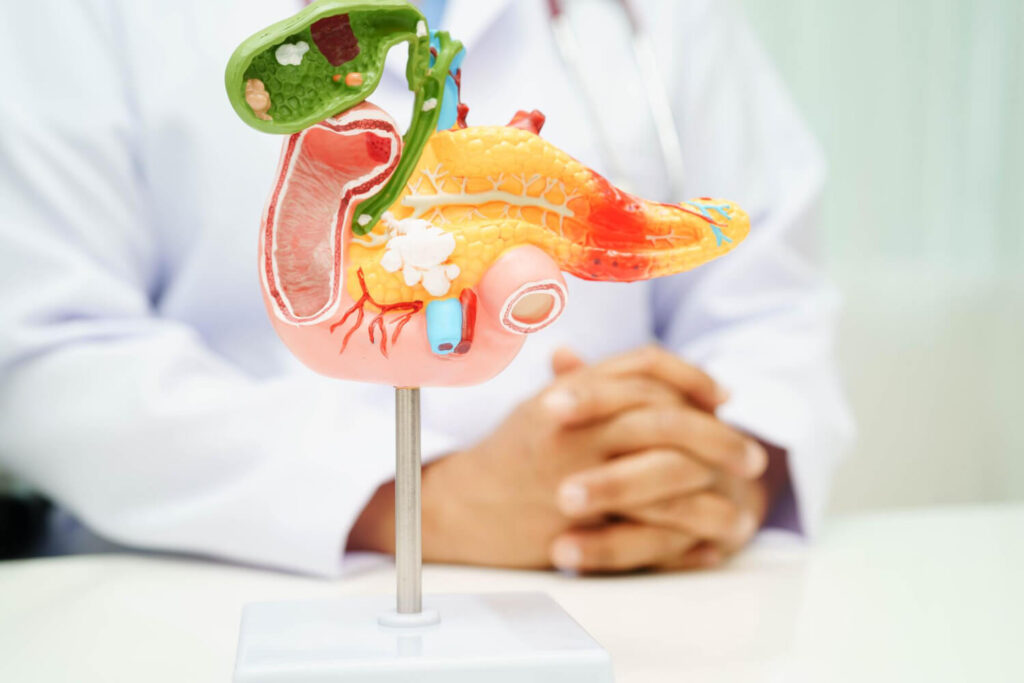
Bile duct cancer, medically known as Cholangiocarcinoma, is a relatively uncommon but serious condition affecting the tubes that carry bile from the liver to the small intestine.
One of the main challenges with this condition is that early symptoms are often subtle, vague, or easily mistaken for other digestive problems. By the time clearer warning signs appear, the disease may already be more advanced.
Learning about early symptoms can help individuals seek timely medical evaluation.
What Is Bile Duct Cancer?
Bile duct cancer develops in the lining of the bile ducts. These ducts help drain bile produced by the liver into the intestine for digestion.
It may occur:
- Within the liver (intrahepatic)
- At the liver hilum (perihilar)
- Near the pancreas (distal bile duct)
Because the bile ducts are deep inside the body, early tumours often do not cause noticeable pain or visible swelling.
What Are the Early Symptoms of Bile Duct Cancer?
Early symptoms of bile duct cancer may include mild abdominal discomfort, unexplained weight loss, persistent itching without rash, fatigue, dark urine, pale stools, or gradual yellowing of the eyes and skin (jaundice).
Not every patient experiences all symptoms. Some individuals may only notice one subtle change.
Common Early Warning Signs
1. Mild Upper Abdominal Discomfort
- Dull ache in the right upper abdomen
- Often intermittent
- May be mistaken for indigestion
2. Unexplained Weight Loss
- Gradual weight reduction without dieting
- Reduced appetite
3. Persistent Itching (Without Rash)
- Caused by bile salts building up in the bloodstream
- May appear before visible jaundice
4. Fatigue
- General tiredness
- Reduced energy levels
5. Dark Urine or Pale Stools
- Changes in bile flow affect stool and urine colour
- Often overlooked unless significant
6. Early Jaundice
- Yellowing of the whites of the eyes
- Skin yellowing may appear later
Why Are Early Symptoms Often Missed?
Early symptoms of bile duct cancer are often missed because they resemble common digestive problems such as indigestion, gastritis, or gallstones.
Several factors contribute:
- Symptoms develop gradually
- Discomfort is usually mild
- No obvious lump or external swelling
- Early-stage disease may not cause pain
Because of this, many patients attribute symptoms to:
- Ageing
- Stress
- Diet changes
- Minor gastrointestinal issues
When Should You See a Doctor?
You may consider medical evaluation if you experience:
- Jaundice
- Persistent itching without clear cause
- Dark urine and pale stools
- Unexplained weight loss
- Ongoing abdominal discomfort lasting more than 2–3 weeks
Early assessment typically involves:
- Blood tests (including liver function tests)
- Ultrasound imaging
- CT scan or MRI
- MRCP (Magnetic Resonance Cholangiopancreatography)
How Is Bile Duct Cancer Diagnosed?
Diagnosis usually requires a combination of:
- Imaging studies (CT or MRI)
- Bile duct imaging (MRCP or ERCP)
- Blood tests
- Biopsy (in selected cases)
Further staging helps determine whether surgery is possible.
Can Early Detection Improve Outcomes?
Yes. Early-stage bile duct cancer may have more treatment options available, including surgery.
When detected early:
- Complete surgical removal may be possible
- Reconstruction of the bile duct can be performed
- Long-term outcomes may improve compared to advanced disease
However, treatment depends on tumour location and overall health status.
Key Takeaways
- Early bile duct cancer symptoms are often subtle and nonspecific.
- Jaundice, itching, and colour changes in urine or stool are important warning signs.
- Persistent symptoms should not be ignored.
- Early evaluation may allow for more treatment options.
- Specialist assessment is important for accurate diagnosis and management planning.
Frequently Asked Questions
1. Is bile duct cancer common?
Bile duct cancer is relatively uncommon compared to other gastrointestinal cancers, but it can be serious if not detected early.
2. Can gallstones cause similar symptoms?
Yes. Gallstones can also cause jaundice and abdominal pain. Imaging tests help differentiate between the two conditions.
3. Does itching always mean bile duct cancer?
No. Itching can occur for many reasons. However, persistent unexplained itching, especially with abnormal liver tests, warrants evaluation.
4. How fast does bile duct cancer progress?
The progression rate varies. Some tumours grow slowly, while others may progress more quickly.
5. Can bile duct cancer be cured?
In selected cases where the tumour is detected early and completely removed through surgery, long-term survival may be possible.
Don’t Ignore Subtle Warning Signs
If you are experiencing unexplained jaundice, persistent itching, or ongoing abdominal discomfort, early medical evaluation may help clarify the cause.
Dr LS Lee is a Senior Consultant Surgeon with expertise in Hepato-Pancreato-Biliary (HPB) surgery. Assessment typically includes a detailed imaging review and discussion of appropriate management options based on individual findings.
To arrange a consultation or learn more about bile duct conditions, contact Dr LS Lee Surgery.